
1 min read
The Opportunity for Robotics Beyond the Factory
Robotics are already established in factories, so why not expand to other industries? In this article, we explain why outdoor operations are next and how EVIE Autonomous’s ARLO is built for practical, off-highway autonomy.
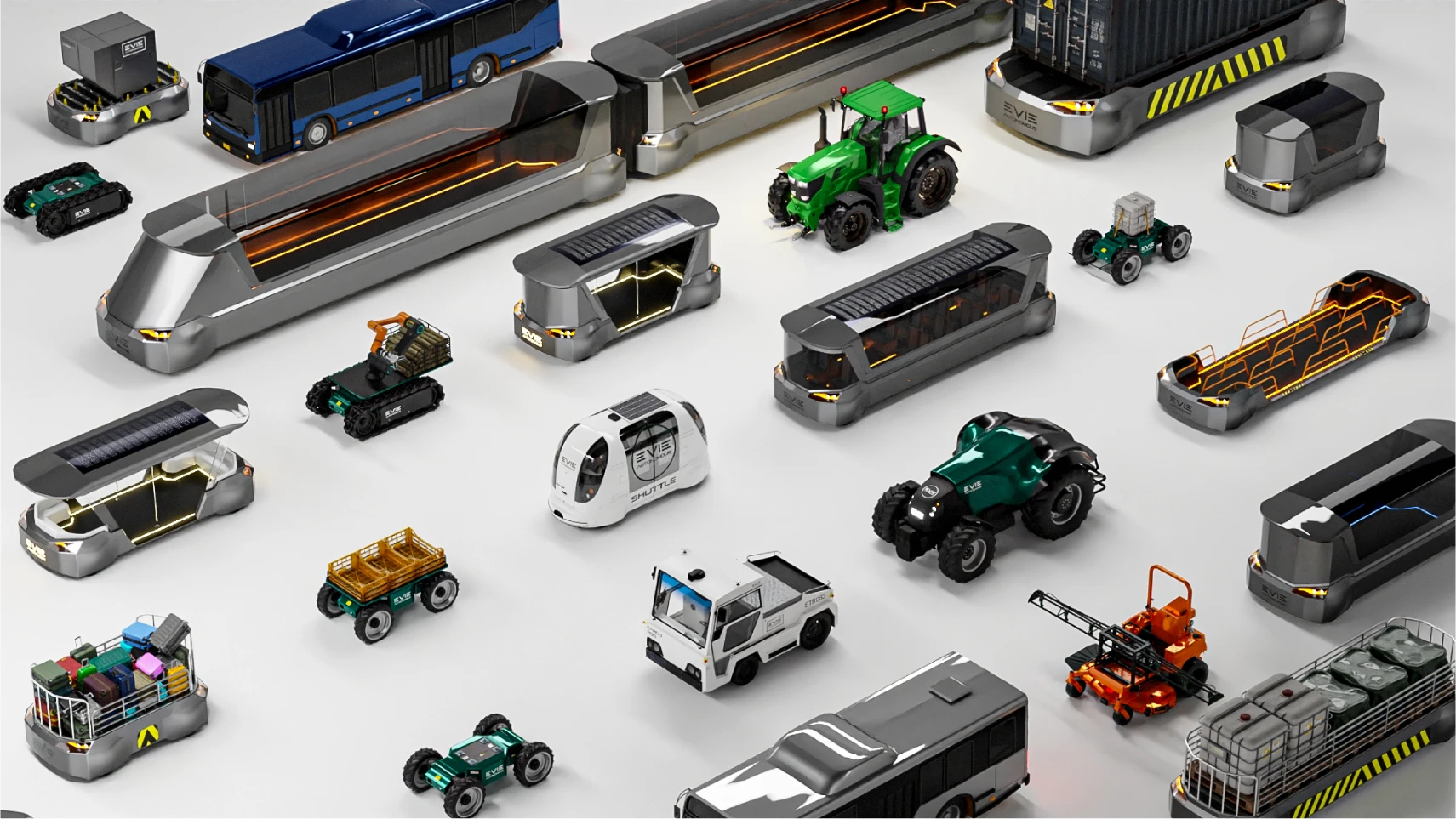
The International Federation of Robotics (IFR) reports that industrial robots operating in factories have reached a record 5 million around the world, a clear indicator of how prevalent automation has become in manufacturing. However, factories are only part of the picture. Every day, vehicles carry out essential work in fields, airports and industrial sites. These are the environments where autonomy can make a real difference.
Environments matter
The environment in which automated robots operate is extremely important for their function. There are several factors that can affect how efficiently they operate:
Obstructions: People, equipment and other vehicles share space with the robots. This can affect the best route day by day.
Varied conditions: Terrain and visibility can vary day by day, especially when working outdoors.
Having a robotics system that can adapt to changing environments is extremely important. It needs to sense what's around it, decide what to do and control the vehicle accordingly.
Practical, off-road autonomy
Changing environments are exactly what ARLO has been developed for. EVIE Autonomous have brought sensing, decision-making, and vehicle control together, with a focus on practical, off-road autonomy.
Their approach is to help machines carry out useful tasks within clearly defined operating conditions. When tasks and boundaries are clear, autonomy can be introduced in a way that delivers real, measurable value. Our recent post on precision agriculture looks at one example of how ARLO can work: targeted weed control.
What's next?
The next wave of robotics will reach far beyond a standard factory. To find out more about how ARLO and EVIE Autonomous can benefit your industry, get in touch.